From Order to Delivery: How to Design Efficient End-to-End Transportation
September 4th, 2025
When you’re scaling a business, the product is only half the equation. The other half - the part that determines whether customers reorder, retailers trust you, and your margins hold up - is how efficiently you move goods from order to delivery.
Transportation is more than trucks and drivers. It’s the backbone that connects your purchasing, production, storage, and sales. And designing an end-to-end flow that’s efficient, transparent, and scalable is what separates growing brands from those constantly putting out fires.
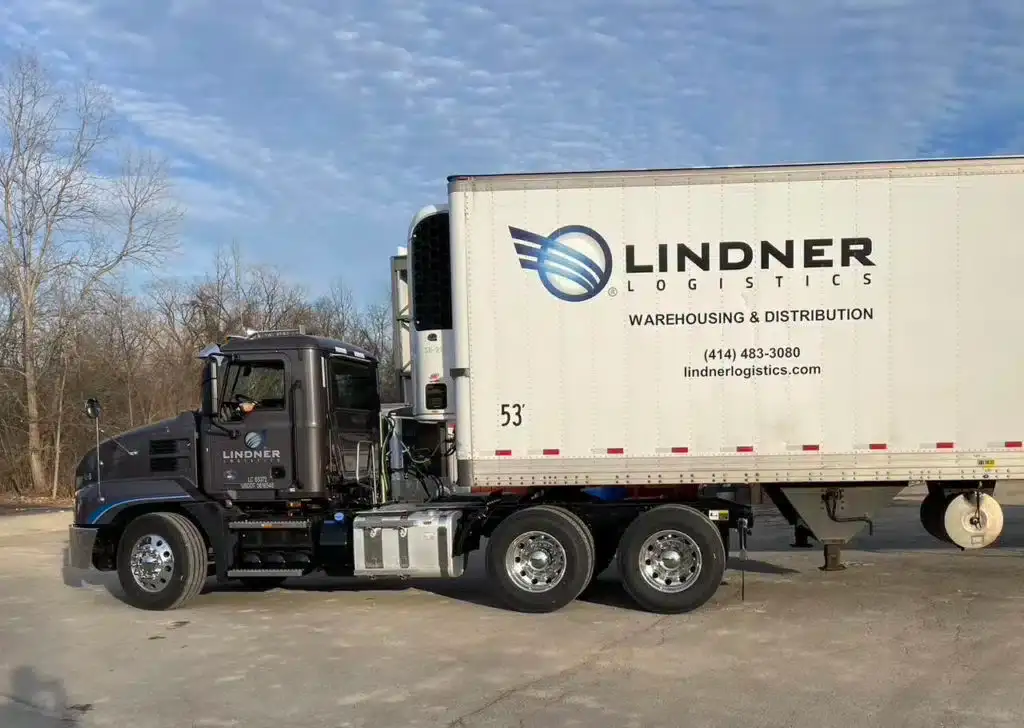
In this guide, we’ll walk through how to design an efficient transportation flow - and where a logistics partner like Lindner Logistics can make the process simpler, faster, and far more reliable.
Map Your Product Flow from Source to Customer
Before you can optimise, you need to visualise. Most businesses underestimate how many “stops” their product makes between supplier and customer - and how much cost hides in those transitions.
Start by sketching out the journey:
Inbound transportation – moving materials or finished goods from suppliers to your facility or warehouse.
Storage and handling – where goods are received, checked, stored, and picked.
Outbound transportation – shipments leaving your facility to reach distributors, retailers, or consumers.
Reverse logistics – returns, recycling, or refurbishing loops (if applicable).
Seeing it all on one page highlights inefficiencies - unnecessary transfers, redundant storage, or backtracking routes.
At this stage, the question isn’t “What trucks do I need?” but “What’s the smartest way to connect these dots?”
Segment Your Transportation Needs
Not all shipments are created equal. A one-size-fits-all approach to logistics usually means overpaying or missing deadlines.
Segment based on:
Shipment size & frequency: full truckload (FTL), less-than-truckload (LTL), parcel, or bulk.
Product requirements: temperature control, hazmat, or fragile goods.
Delivery urgency: same-day, just-in-time (JIT), or scheduled.
Destination types: direct-to-consumer, B2B, or distribution centers.
Each segment may require different equipment, routes, or partners. For instance, Lindner Logistics specialises in multi-temperature and value-added warehousing - ideal for businesses that ship both ambient and refrigerated products in the same network. That flexibility means you can centralise operations without managing multiple facilities or carriers.
Integrate Warehousing and Transportation Decisions
A common mistake is treating warehousing and transportation as separate budgets or departments. In reality, they’re two halves of the same coin. The way you store goods directly affects how efficiently you can ship them.
Here’s how integration pays off:
Cross-docking reduces storage time by moving incoming goods directly to outbound trucks.
Zone picking and staging speed up order fulfillment for multi-stop routes.
Proximity warehousing cuts delivery times and fuel costs by placing stock closer to major markets.
A 3PL (third-party logistics provider) like Lindner Logistics combines storage, handling, and transportation under one roof. That means fewer handoffs, better communication, and optimised truck utilisation. Their facilities in Wisconsin, for example, provide ideal access to regional and national routes, making consolidation and distribution seamless.
Use Data to Optimise Routes and Loads
Even the most efficient warehouse can’t save a poorly planned route. Transportation optimization is where software and experience intersect.
Key strategies include:
Route optimization: balancing cost, distance, and time to minimize empty miles.
Load consolidation: combining shipments going in the same direction to maximize truck capacity.
Real-time visibility: GPS and telematics allow proactive communication with customers and faster issue resolution.
Carrier performance tracking: monitoring on-time delivery rates, damage incidents, and cost per mile.
Smaller businesses often lack the tools or data to manage this in-house. Lindner Logistics leverages routing and visibility technology to plan efficient transportation flows for clients, ensuring reliable performance without requiring you to invest in systems or staff.
Build in Flexibility and Scalability
Your transportation design should grow with your business. What works for 100 shipments a week may break at 500 - unless you’ve built flexibility into your model.
Here’s how:
Modular partnerships: Work with a logistics provider that can scale capacity up or down.
Seasonal or surge planning: Pre-arranged overflow storage or carrier capacity for peak periods.
Multi-modal options: Combining road, rail, or intermodal transport when volumes justify it.
Redundancy: Alternate routes or carriers to mitigate disruptions.
Lindner Logistics provides flexible warehousing and transportation solutions that scale from start-up to enterprise levels. Whether you’re shipping regionally or nationwide, you can expand without the risk of underutilised assets or staffing overhead.
Prioritise Customer Experience
Transportation design isn’t just about saving money - it’s about delivering consistently. Every delayed order or damaged shipment erodes trust.
A customer-centric logistics model focuses on:
Predictable lead times rather than just speed.
Transparent tracking and communication.
Error-free fulfillment through integrated warehouse-transport coordination.
Sustainability that aligns with customer expectations and corporate values.
Partnering with a logistics provider that understands service quality - not just freight rates - can make a massive difference. Lindner Logistics, for instance, provides both visibility tools and dedicated account management to ensure each client’s transportation flow supports their brand promise.
Measure and Improve Continuously
End-to-end logistics isn’t static. Your flow should evolve as markets, costs, and customer expectations change.
Establish KPIs such as:
On-time delivery rate
Cost per shipment or per mile
Damage / claim ratio
Inventory turnover
Average dwell time in warehouse
Regularly review these metrics to find where small tweaks can yield big results - such as adjusting consolidation frequency or shifting to a closer distribution hub.
Lindner Logistics’ integrated approach means data from warehousing and transportation are analysed together, giving you actionable insights rather than fragmented reports.
The Bottom Line
Designing an efficient end-to-end transportation flow is about orchestration - aligning suppliers, storage, carriers, and customers in one smooth rhythm. When done right, it reduces costs, improves delivery performance, and strengthens customer loyalty.
If you’re ready to streamline your order-to-delivery process without the complexity of managing it all in-house, Lindner Logistics offers the expertise, infrastructure, and flexibility to make it happen.
👉 Learn more at lindnerlogistics.com and discover how our integrated warehousing and transportation solutions can keep your business moving efficiently - from order to delivery.