Foreigner Trade Zone 101 | Cut Duties & EU Carbon Fees
May 13th, 2025
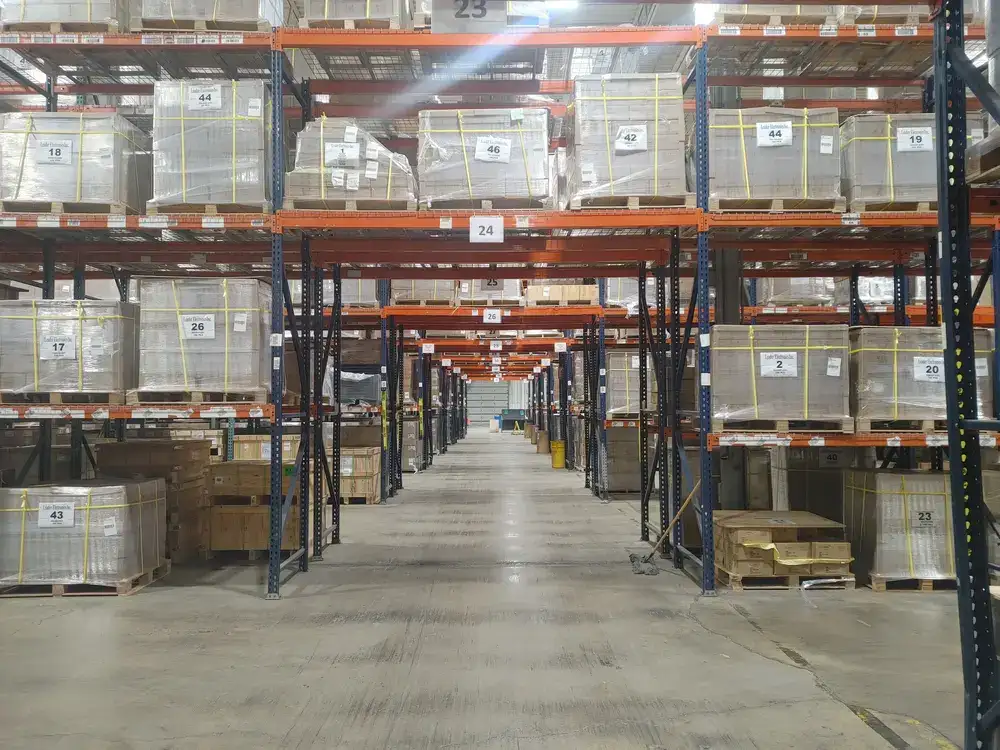
In 2025 the cheapest way for a Wisconsin exporter to shield its profit from both rising U.S. import duties and Europe’s new carbon fee is to park goods inside, Lindner Logistics’ Foreign-Trade Zone (FTZ 41) at Port Milwaukee - the only public FTZ run by a third-party logistics provider in the state. Goods admitted to the zone wait duty-free, can be repacked into fuller containers, and leave the gate only when the paperwork and the price are right. The result is a double saving: you delay or even erase U.S. customs duty and you pay Europe’s carbon surcharge once instead of several times. The following guide explains why the math changes this year, how an FTZ works in everyday language, and why Lindner’s site is uniquely placed to help businesses from Green Bay to Madison control landed cost.
Why the cost picture changed for Wisconsin shippers
Since January 2024 every ocean voyage that calls at an EU port must buy carbon permits under the bloc’s Emissions Trading System (EU ETS). The law priced 40 % of each ship’s CO₂ last year; it jumps to 70 % in 2025 and reaches 100 % in 2026. Those permits - officially called EUAs - have traded around €70 ($76) a tonne through May 2025.
Carriers pass the charge straight to customers. Maersk’s Q2 2025 tariff lists an “Emissions Surcharge” of €59–62 for every 40-foot container moving from U.S. East Coast ports to North Europe. A brand-new rule, FuelEU Maritime, fines ships another €2 400 per tonne of dirty fuel; Maersk folds that penalty into the same line, making it even harder to spot.
Closer to home, Congress is debating the End China’s De Minimis Abuse Act, which would cut today’s $800 duty-free parcel limit. If the bill passes, more shipments will owe regular duties the moment they hit U.S. soil. Cost pressure is coming from both directions; Wisconsin exporters need a tool that works on both bills at once.
What exactly is a Foreign-Trade Zone?
Imagine a fenced-in warehouse that U.S. Customs treats as if it were still overseas. When a pallet enters an FTZ, your company does not pay import duty, federal excise tax or the Merchandise Processing Fee (MPF). Duty is due only when the goods leave the gate bound for a U.S. customer; if they are re-exported, you may never pay that duty at all.
An extra bonus is the weekly entry procedure. Instead of filing—and paying for—dozens of daily customs entries, an FTZ operator can submit one electronic “type 06” entry per week that covers every outbound shipment. That single filing is subject to a capped MPF, so paperwork charges drop sharply.
How FTZ 41 at Port Milwaukee stands apart
Lindner Logistics operates the only third-party FTZ in Wisconsin. Businesses in the Fox Valley, Eau Claire or the greater Milwaukee-Chicago corridor can truck goods two hours to the zone instead of hauling them to Chicago, Minneapolis or Detroit for the same customs break. The site offers:
Real-time WMS tracking that flags under-filled orders so you can wait until a container is full;
Dry, refrigerated and frozen rooms for food and pharma, allowing reefers to be packed at the last minute and run fewer hours;
Light assembly and kitting services, so you can take advantage of the “inverted tariff” rule—if parts carry 10 % duty but the finished product is 3 %, you pay the lower rate when the item finally enters the U.S. market.
The carbon fee nobody can ignore
Because the EU divides its carbon bill by the number of boxes on a vessel, half-empty containers pay the same surcharge as full ones. Consolidating freight inside FTZ 41 is therefore a simple way to stretch one fee across more goods. A slower ship burns less fuel, too, and carriers share that saving when exporters commit to sail dates early.
Reducing speed by 10 % cuts fuel burn by roughly 20 %, according to an International Maritime Organization energy-efficiency study.
When goods wait duty-free in Milwaukee, shippers can book those earlier, slower sailings without tying up cash in customs charges.
Putting the numbers together
Scenario | Containers per month | EU carbon fees | MPF filings | Annual carbon + MPF cost |
|---|---|---|---|---|
Four weekly LCL pallets | 4 | €240 | 48 | $19 400 |
One full box via FTZ 41 | 1 | €60 | 12 | $5 800 |
Assumes $150 average broker fee per filing and MPF cap applies. The FTZ model saves about $13 600 a year for this single product line, before counting the cash-flow gain from deferred duty.
What happens if the $800 parcel loophole closes?
De-minimis reform would push thousands of small e-commerce parcels into the normal duty stream overnight. Lindner’s FTZ already handles unit picks: import a bulk container duty-free, store the inventory, and release parcels only when you print a domestic label. That shift preserves the speed shoppers expect while keeping the duty meter at zero until the last possible moment.
A simple three-step start-up plan
First, run a landed-cost check: combine each SKU’s duty rate with the current EUA forward price—analysts see an average of €74 for 2025 and predict the high €90s by 2027. Next, reserve space in FTZ 41 before peak season; Port Milwaukee reports rising interest and finite capacity. Finally, negotiate a carbon-fee ceiling with your carrier; Maersk recalculates its surcharge every quarter, and Lindner’s brokerage partner can lock rates when permit futures dip.
Looking toward 2026
From 1 January 2026 ships must cover 100 % of their CO₂ footprint, and the EU plans to price methane and nitrous oxide the same way. The FuelEU penalty remains a steep €2 400 per tonne, which shipbrokers call “inflationary.” As both rules tighten, the cost gap between half-empty and full containers will widen even further, and the value of duty-free storage near Lake Michigan will only grow.
In conclusion
A Foreign-Trade Zone is no longer just a tax perk; it is a carbon-savings machine. Lindner Logistics’ FTZ 41 is the only place in Wisconsin where you can stall the duty clock and squeeze Europe’s green surcharge in the same move. If your cargo heads across the Atlantic - cheese, engines, medical kits or online orders - parking it in Milwaukee means fewer customs filings, fuller containers, slower ships and lower bills. Talk to the Lindner team today, and turn two new regulations into one clear competitive edge.
Related news
View all
September 21st, 2026
Pharma and Healthcare Logistics: What Temperature Control and Traceability Requirements Actually Mean for Your 3PL
Cold storage is a starting point, not a qualification. For pharmaceutical and healthcare businesses, the real question is whether a 3PL partner meets the regulatory requirements that apply to pharmaceutical distribution - and whether their systems produce the documentation to prove it. This article covers DSCSA authorization and traceability, cGMP storage controls, international GDP guidance, pharmaceutical temperature requirements, and what a WMS needs to do to support compliant operations.

September 14th, 2026
The Hidden Costs of Getting Retail Compliance Wrong: Chargebacks, Rejections, and What Actually Prevents Them
Retail chargebacks show up as deductions. Rejected shipments show up as return freight costs and delayed revenue. Neither appears as a catastrophic single event, but the cumulative effect on margins is significant and almost entirely preventable with the right warehouse operations in place. This article breaks down what causes retail compliance failures, what they actually cost when measured honestly, and what the operational changes look like that prevent them upstream.
September 7th, 2026
Just-in-Time Warehousing vs. Safety Stock: Which Inventory Strategy Fits Your Business?
Just-in-time warehousing and safety stock represent opposite ends of the inventory strategy spectrum, and both have genuine business cases depending on demand predictability, supplier reliability, and risk tolerance. Getting the balance wrong in either direction costs money, either in excess holding costs or in stockouts and missed orders. This article explains how each strategy works, what the trade-offs are, and how to think about the right approach for your specific operation.