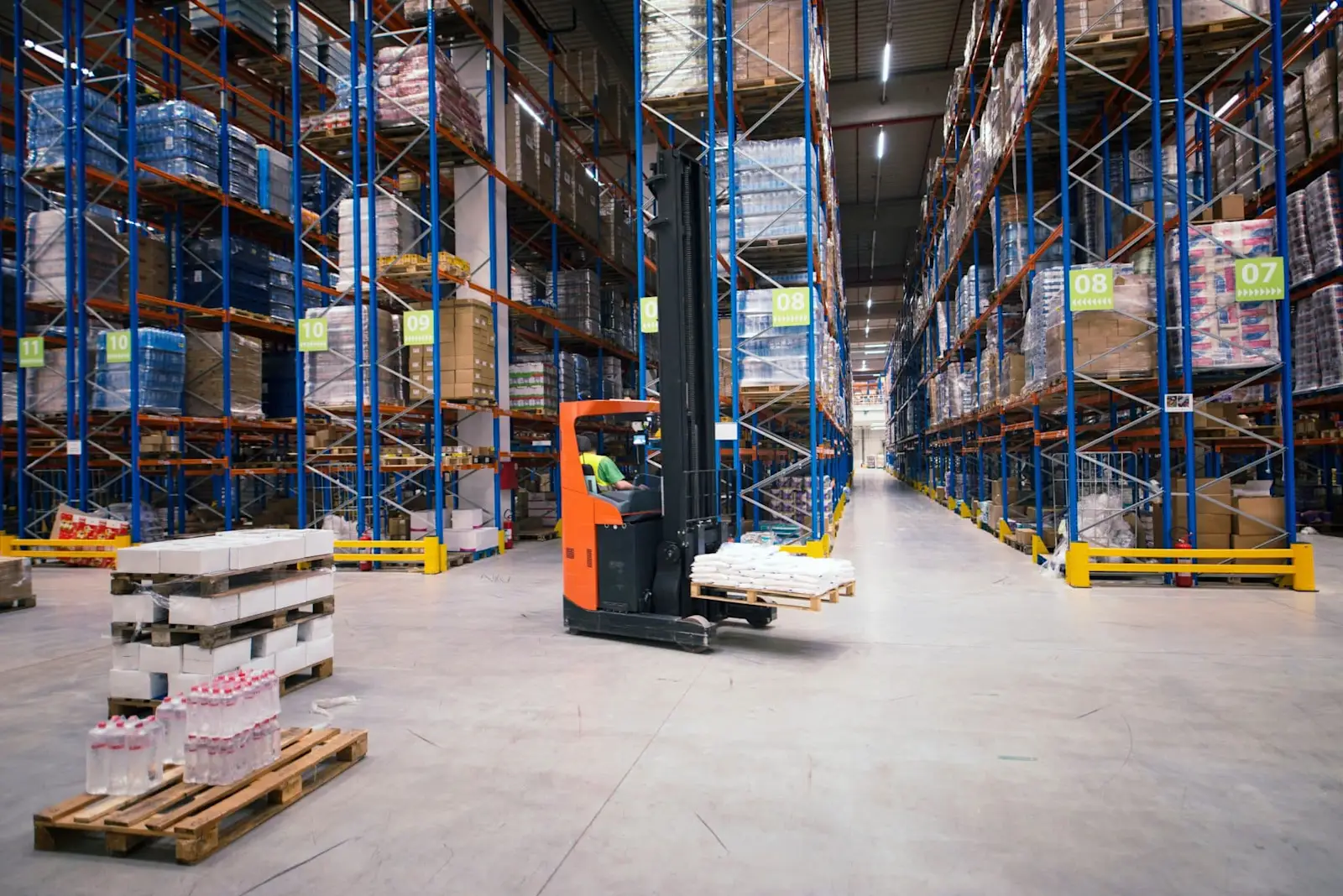
What Is Just-in-Time (JIT) Warehousing
June 3rd, 2025
What Is Just-in-Time (JIT) Warehousing - and How Can It Boost Supply Chain Efficiency?
In today’s competitive logistics environment, efficiency isn’t just a goal—it’s a survival strategy. Businesses are increasingly turning to Just-in-Time (JIT) warehousing as a way to reduce overhead, speed up delivery, and eliminate excess inventory. But to pull off JIT successfully, you need more than just timing—you need the right logistics partner, infrastructure, and visibility.
Lindner Logistics supports companies using JIT models with the technology, location, and agility needed to respond quickly and accurately to shifting demand. With a BRC-compliant, temperature-controlled warehouse and Foreign Trade Zone (FTZ) capabilities in Milwaukee, Wisconsin, Lindner helps clients stay lean and responsive—without compromising quality or control.
How Just-in-Time Warehousing Works
Just-in-Time warehousing is a logistics strategy where goods are delivered to the warehouse or production line right when they’re needed—not weeks or months in advance. The goal is to minimize inventory holding costs while maintaining a steady, reliable supply of materials or products.
Instead of storing large safety stock, companies use precise demand forecasts and flexible logistics to ensure that the right products arrive at the right time. This strategy works best when paired with:
Real-time inventory visibility
Integrated order and warehouse management systems
Proximity to manufacturing or end-consumer markets
A responsive logistics provider who can pivot quickly
Why JIT Warehousing Is Gaining Popularity in 2025
In a supply chain landscape shaped by volatility—from port disruptions to shifting consumer demand—agility and accuracy are the keys to staying competitive. Here’s why JIT is more relevant than ever:
Cost reduction: Less capital tied up in unsold inventory
Faster fulfillment: Shorter lead times mean more responsive customer service
Smaller footprint: Reduces the need for massive warehousing real estate
Waste reduction: Decreases risk of overstocking and product expiration
However, JIT success depends heavily on your logistics partner’s ability to execute.
Without precise tracking and rapid turnaround, JIT models can backfire - leading to stockouts, delayed production, or lost revenue. That’s why your warehouse provider must offer real-time visibility, quick response times, and scalable infrastructure.
How Lindner Logistics Supports Just-in-Time Models
Lindner’s warehouse in Milwaukee is uniquely positioned to support businesses running on JIT logistics. Here’s how:
Our Warehouse Management System (WMS) allows clients to view real-time inventory levels, track inbound and outbound orders, and set automated reorder thresholds.
Located in Wisconsin’s only 3PL-operated Foreign Trade Zone (FTZ), Lindner gives companies flexibility to defer duties until goods are released—making inbound shipments more cost-effective.
With temperature-controlled zones, HazMat-certified storage, and BRC compliance, Lindner supports clients with sensitive or regulated inventory—often key to successful JIT programs.
Our direct-to-consumer (D2C) capabilities and e-commerce integrations enable last-minute fulfillment without additional warehouse transfers.
JIT Warehousing vs. Traditional Warehousing
Feature | Traditional Warehousing | Just-in-Time Warehousing |
Inventory Volume | High (bulk stock stored long term) | Low (minimal on-hand inventory) |
Inventory Holding Cost | High | Low |
Risk of Overstock | Medium to High | Low |
Flexibility | Moderate | High (requires agile logistics) |
Warehouse Role | Long-term storage hub | Short-term staging and rapid fulfillment |
Is JIT Right for Your Business?
Just-in-Time warehousing isn't a one-size-fits-all solution. It's ideal for companies that:
Manufacture based on orders (vs. mass production)
Serve high-turnover retail or D2C markets
Import frequently and want to reduce customs costs via FTZ storage
Operate in industries with short product life cycles (e.g., tech, fashion, food)
Lindner Logistics can help you assess whether a hybrid or full JIT model fits your business goals—and provide the infrastructure to support it.
Final Thoughts: JIT + the Right 3PL = Competitive Advantage
Just-in-Time warehousing isn’t just about speed—it’s about strategy, coordination, and trust. Partnering with a 3PL like Lindner Logistics gives you the tools, space, and technology to make JIT warehousing a scalable, cost-saving reality.
If you're ready to eliminate waste, improve order accuracy, and adapt faster to market changes, we're ready to help.
👉 Contact us today to learn how Lindner Logistics supports Just-in-Time inventory models with tech-driven warehousing and FTZ flexibility.
Related news
View all
September 21st, 2026
Pharma and Healthcare Logistics: What Temperature Control and Traceability Requirements Actually Mean for Your 3PL
Cold storage is a starting point, not a qualification. For pharmaceutical and healthcare businesses, the real question is whether a 3PL partner meets the regulatory requirements that apply to pharmaceutical distribution - and whether their systems produce the documentation to prove it. This article covers DSCSA authorization and traceability, cGMP storage controls, international GDP guidance, pharmaceutical temperature requirements, and what a WMS needs to do to support compliant operations.

September 14th, 2026
The Hidden Costs of Getting Retail Compliance Wrong: Chargebacks, Rejections, and What Actually Prevents Them
Retail chargebacks show up as deductions. Rejected shipments show up as return freight costs and delayed revenue. Neither appears as a catastrophic single event, but the cumulative effect on margins is significant and almost entirely preventable with the right warehouse operations in place. This article breaks down what causes retail compliance failures, what they actually cost when measured honestly, and what the operational changes look like that prevent them upstream.
September 7th, 2026
Just-in-Time Warehousing vs. Safety Stock: Which Inventory Strategy Fits Your Business?
Just-in-time warehousing and safety stock represent opposite ends of the inventory strategy spectrum, and both have genuine business cases depending on demand predictability, supplier reliability, and risk tolerance. Getting the balance wrong in either direction costs money, either in excess holding costs or in stockouts and missed orders. This article explains how each strategy works, what the trade-offs are, and how to think about the right approach for your specific operation.