What Is the Difference Between a Warehouse and a Distribution Center?
October 20th, 2026
A warehouse and a distribution center can offer overlapping services, but they generally prioritize different activities. The labels point to different operating models with different layouts and different pricing. Getting the distinction right before you request quotes keeps you from paying for capabilities you do not need, or from storing product in a building built for a different purpose.
The question "what is a distribution center" usually comes up when a business outgrows simple storage and needs product to move on a schedule. This guide defines both facility types, compares them side by side, and explains how to decide which one fits your product.
What a Warehouse Is
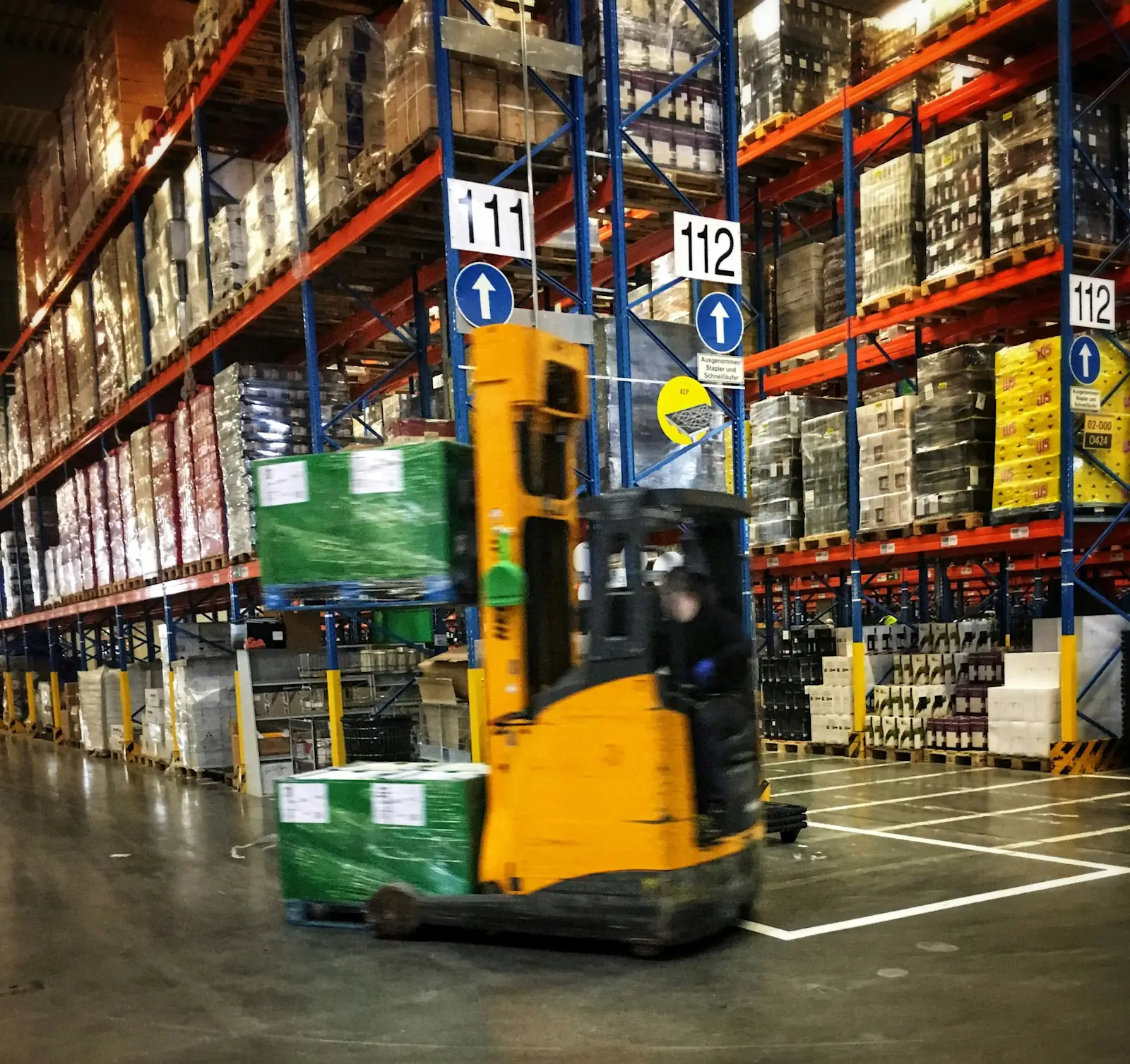
A warehouse is primarily used to hold and manage inventory until it is needed. Its main job is storage, so the layout favors density: racking, pallet positions, and aisles sized to hold as much product as the space allows. Product usually arrives in bulk, stays for long stretches, and leaves in similar bulk quantities.
In a traditional storage-focused warehouse, handling may be relatively light, although modern warehouses can also process and fulfill orders. Receiving, putaway, inventory control, and occasional outbound shipments make up most of the activity. That makes a warehouse a good match for seasonal inventory, slow-moving products, and goods that a business buys ahead of demand.
What a Distribution Center Is
A distribution center generally prioritizes processing and moving inventory, although it may also hold reserve stock. Product arrives from suppliers and may be stored, sorted, consolidated, picked, and shipped to customers, stores, or other facilities. The goal is to shorten the time between receiving an item and sending it where it needs to go.
Because speed matters, a distribution center is designed around the flow of product from receiving through picking, staging, and shipping. It handles more frequent shipments than a warehouse, often order by order. Some distribution centers also run cross-docking, where inbound freight moves to outbound trucks with little or no storage in between.
The types of distribution centers vary with the customer they serve. Retail distribution centers replenish stores, e-commerce fulfillment centers pick and pack individual consumer orders, and cross-dock facilities focus on transfers. A distribution center vs fulfillment center comparison often comes down to order profile: fulfillment centers commonly handle individual customer orders, while distribution centers may supply stores, wholesale accounts, or consumers.
Main Differences in Function, Layout, and Speed
The difference between warehouse and distribution center operations shows up in how long product stays and how often it is handled.
Factor | Warehouse | Distribution center |
Primary purpose | Store inventory | Move inventory to its next destination |
Time in the building | Often longer, depending on inventory needs | Often shorter, but reserve stock may be held |
Layout | Built for storage density | Built for flow, with picking and staging areas |
Handling | Receiving, putaway, and bulk outbound | Sorting, picking, consolidation, and frequent shipping |
Order profile | Fewer, larger shipments | More frequent, often smaller shipments |
The distribution center vs warehouse distinction comes down to function, not the name on the door. Many buildings combine both, with a storage area behind a pick-and-ship operation. What matters is which activity drives the design and the cost.
Which One Your Business Needs
Start with how your product moves. If inventory sits for long periods and ships in large, infrequent loads, you need warehouse space. If orders arrive daily, ship to many destinations, or need consolidation before they leave, you need distribution capability.
Several signs point toward a distribution model. Customers or retailers set delivery windows, orders include many SKUs that must be assembled before shipping, and inventory turns quickly enough that transportation costs matter as much as storage costs.
Many businesses need both. A common pattern is to hold bulk inventory in storage and release it to a pick-and-ship area as orders come in. In that case, the warehouse vs distribution center question becomes a question of how much of each you need and whether one provider can run both.
Where a 3PL Fits Between the Two
A third-party logistics provider can operate in either role, or in both at once. Instead of leasing or building a distribution center, a business contracts for the storage, order handling, and transportation it needs and scales the arrangement as volume changes. The operation may use shared or dedicated facilities; the service agreement defines which capabilities and capacity are provided.
That structure suits businesses that cannot justify a dedicated distribution center but still need more than plain storage. A provider's distribution services can cover inbound receiving, inventory control, order processing, and outbound shipping from one location, with storage and handling typically priced as separate lines.
How Lindner Supports Storage and Distribution in Wisconsin
Lindner's third-party logistics management services combine warehousing and distribution strategies across four Wisconsin facilities with more than 500,000 square feet of warehouse space. Lindner's Wisconsin 3PL page lists warehousing, transportation management, order fulfillment, distribution network design, and value-added services among its services.
On the storage side, Lindner's general storage is available for both short-term and long-term needs for non-perishable and durable goods, with a storage tracking system and WMS software that gives customers real-time visibility into stored goods. Lindner also specializes in multi-temperature storage alongside dry goods storage.
On the movement side, Lindner lists transportation management with route optimization, fleet management, and last-mile delivery. Together, those services let a business run storage and outbound movement through one provider instead of splitting the work between a warehouse operator and a separate distribution operation.
The Takeaway
A warehouse primarily emphasizes inventory storage, while a distribution center emphasizes order processing and movement. The labels matter less than the activity behind them: how long product stays, how often it is handled, and how quickly orders must leave. Define those three points first, and the right facility type, or the right mix of both, becomes clear before any quote arrives.
To talk through whether storage, distribution, or both fit your product, contact Lindner about Wisconsin storage and distribution options, and include your product type, expected order volume, and temperature requirements. The team typically responds to inquiries within 24 business hours.
Related news
View all
October 27th, 2026
Is There Such a Thing as an FDA-Certified Warehouse?
The FDA registers food facilities but does not certify or approve warehouses. Learn what an FDA registered warehouse really means, which audits carry a certificate, and what to ask a storage provider before signing.

October 12th, 2026
What Is Kitting in a Warehouse, and When Should You Outsource It
Kitting groups separate items into a single unit before an order ships. This guide explains how kitting differs from pick and pack and when it makes sense to outsource kitting services to a 3PL.

October 5th, 2026
How Much Does a 3PL Cost, and What Drives the Price?
3PL pricing depends on how your product moves, how it must be stored, and which services it needs. This guide explains the main pricing models, what drives the cost, and how to compare quotes on equal terms.