From Pallet to Prime: Building a Unified Fulfillment Strategy with a Single 3PL Partner
December 2nd, 2025
Most brands no longer sell in just one way. Pallets ship to big‑box retailers, mixed cases go to distributors, and individual parcels head straight to consumers’ homes. Managing all of that with separate providers and systems quickly becomes expensive and chaotic.
A single 3PL partner with the right warehousing, processes, and technology can change that picture. By running all routes to market from shared inventory in one network, brands gain clearer visibility, lower costs, and more consistent service levels without reinventing their entire supply chain.
Why a unified fulfillment model matters now
Customer expectations are higher than ever. Retail buyers expect on‑time, in‑full pallet or case shipments that follow routing guides exactly, while online shoppers demand fast, accurate deliveries with real‑time tracking. Falling short on either side hurts both sales and brand perception.
When each route to market sits in its own silo - with its own stock, team, and systems - problems multiply. Inventory is duplicated, one channel runs out while another sits on excess, and operations teams spend more energy reconciling data than serving customers. A unified strategy attacks this complexity at the source.
How one 3PL can handle retail, wholesale, and ecommerce
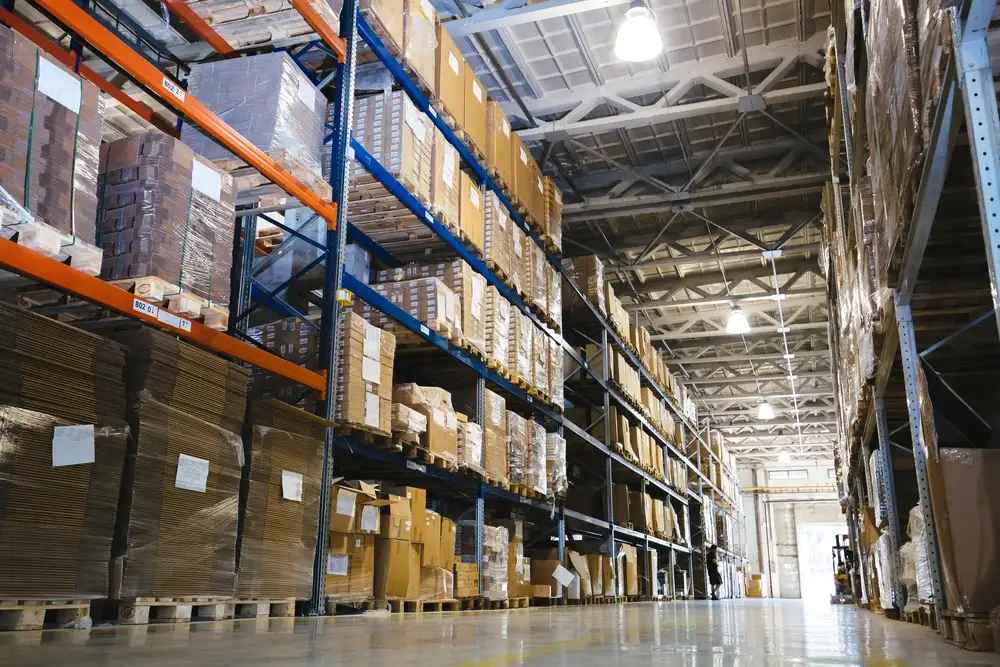
A capable 3PL fulfillment partner designs operations to handle multiple order profiles in the same facility. Full pallets and mixed pallets ship to retail distribution centres, while smaller case orders flow to distributors and foodservice customers, and single‑unit parcels are picked, packed, and shipped for ecommerce and marketplace orders.
Instead of building separate warehouses for each type of order, the 3PL uses different pick paths, storage strategies, and packing stations under one roof. Systems and processes decide whether a SKU is going on a pallet, into a mixed case, or into a branded ecommerce box, all starting from the same inventory pool.
Different order types, one warehouse
In this model, retail orders are typically transmitted via EDI, scheduled against delivery appointments, and shipped on pallets that must meet strict labelling and packing rules. Wholesale or distributor orders often require mixed cases and more flexible shipment sizes. Ecommerce and marketplace orders, by contrast, involve each‑picking, custom packaging, and parcel carriers.
The 3PL configures workflows and staffing so that all of these flows can run in parallel without interference. Pallet moves and parcel packing share the building but use tailored equipment, layouts, and handling rules to keep operations efficient and accurate.
Shared inventory, smarter stock
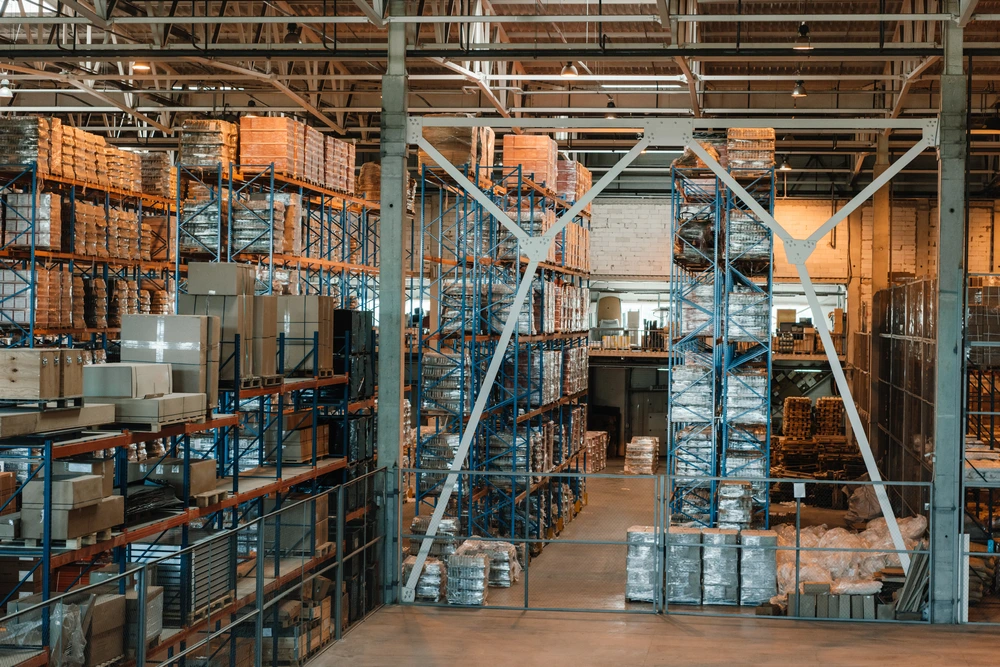
The real power comes from shared inventory. Instead of ring‑fencing stock for each route to market, the 3PL holds a single pool of product and uses the warehouse management system to allocate units to retail, wholesale, or ecommerce orders as they come in.
This approach reduces safety stock because the same units can satisfy whichever demand materialises first. It also cuts the risk of stockouts in one route to market while another channel sits on overstock. Planners can see one true picture of inventory and demand, making forecasting and replenishment more precise.
Technology backbone: WMS, integrations, and visibility
The entire strategy depends on strong systems. A robust warehouse management system tracks every unit by location, lot, and status, and supports different order types with appropriate picking and packing rules. It understands that a large store replenishment order and a single‑unit ecommerce order need very different handling.
Integrations tie this WMS to ERPs, retailer systems, and online platforms. Orders flow in automatically via EDI, APIs, or order feeds, and shipment confirmations, tracking numbers, and inventory updates flow back out. This reduces manual entry, cuts errors, and keeps availability and order status in sync across every platform where the brand sells.
What the WMS must do
To support a unified fulfillment model, the WMS should:
Provide real‑time inventory visibility across all locations and statuses.
Accept orders from multiple sources in different formats and convert them into executable work.
Apply allocation logic, wave planning, and pick strategies based on order type and priority.
When this works well, operations teams no longer have to guess where stock is or manually prioritise orders. The system orchestrates tasks so staff focus on execution, not firefighting.
Operations on the floor: from pallets to parcels
On the warehouse floor, design turns strategy into reality. Pallet storage areas, case pick zones, and each‑pick locations are laid out so that high‑velocity SKUs are easy to reach for both bulk and small‑order picking. Dock doors and staging areas are arranged to keep large outbound shipments and parcel flows from interfering with each other.
Staffing plans and shift patterns reflect daily order mixes. On days with heavy retailer volume, more labor can be directed to pallet building and loading; on peak ecommerce days, more associates move to each‑picking and packing stations. The 3PL’s ability to flex between these modes is a key indicator of fit.
Value‑added services that make the difference
Brands often need more than simple pick‑and‑ship. A strong 3PL offers value‑added services that support each route to market without increasing risk. For retail, that might mean ticketing, price labelling, or building special promotional displays. For ecommerce, it might involve custom packaging, inserts, and returns handling.
These services work best when they sit close to core storage and picking operations, under the same quality and traceability controls. That way, brands can run campaigns, change packaging, or introduce new bundles quickly, without juggling another vendor or losing visibility.
One brand, three routes to market: a simple example
Imagine a brand that sells the same product line through a national retailer, a regional distributor network, and its own online store. All inventory sits in a single Midwest warehouse run by one 3PL.
Retail orders arrive weekly via EDI and ship as full or mixed pallets to several distribution centres.
Distributor orders come in as cases and ship on scheduled LTL lanes.
Online orders flow in daily from the brand’s website and marketplace listings, are picked as single units, and leave via parcel carriers.
Because all of this runs from the same inventory pool using one system, the brand can see total demand, total stock, and total performance at a glance, while the 3PL ensures each route to market gets the service level it needs.

Benefits of using a single fulfillment partner
Moving to a single‑3PL model for all routes to market delivers benefits that go beyond convenience.
Fragmented vs. unified fulfillment at a glance
Dimension | Fragmented approach | Single‑3PL unified approach |
Inventory | Duplicated across sites and channels | Shared pool serving all routes to market |
Systems & data | Multiple platforms, hard to reconcile | One source of truth for stock and performance |
Working capital | Higher safety stock and more obsolescence | Lower buffer stock, better turns |
Vendor management | Several contracts and points of contact | One accountable partner |
Scalability | New channels require new infrastructure | New channels plug into existing warehouse & systems |
Financially, brands typically reduce stock levels and avoid expensive urgent transfers between sites. Operationally, teams spend less time fixing mismatched data and more time improving service. Strategically, it becomes easier to add new retailers, distributors, or online platforms because the physical and digital infrastructure are already in place.
What to look for in a fulfillment 3PL
Choosing the right partner is crucial. Use this checklist when reviewing options:
Proven experience running pallet, case, and each‑pick operations in the same facility.
A capable WMS that supports multiple order types and integrates with your ERP, retailer systems, and online platforms.
A track record of meeting retailer routing guides and service requirements, alongside strong performance on small‑parcel metrics.
Value‑added services like kitting, relabeling, custom packing, and returns handling that support all routes to market.
Clear KPIs and reporting on on‑time performance, order accuracy, and inventory health.
Facility locations and transport options that align with where your customers actually are.
By consolidating fulfillment with a single, capable 3PL, brands can move confidently “from pallet to Prime” - serving retailers, distributors, and consumers from one smart, flexible fulfillment network.