What Makes a Modern Warehouse: Key Facilities, Technology, and Services to Look For
October 30th, 2025
The warehouse industry has transformed dramatically over the past decade. Once considered static storage spaces, warehouses today are dynamic, technology-enabled distribution hubs that power modern supply chains.
For growing manufacturers, e-commerce retailers, and distributors, understanding what defines a modern warehouse is essential when choosing a logistics partner. The right facility can reduce costs, improve accuracy, and enhance customer satisfaction - while the wrong one can slow growth and introduce costly inefficiencies.
So, what truly makes a warehouse modern in 2025? Let’s explore the key features, technologies, and services that set best-in-class facilities - like Lindner Logistics - apart from the rest.
The Evolution of Warehousing: From Storage to Smart Distribution
Traditionally, warehouses were simple storage points — places where goods sat until they were needed. Today, a modern warehouse functions as an integrated logistics ecosystem combining automation, data analytics, and value-added services.
This evolution was driven by three forces:
The explosion of e-commerce and omnichannel fulfillment
Rising expectations for real-time visibility and faster delivery
Technological advancements in warehouse management systems and automation
According to Gartner, over 80% of logistics providers now consider data and automation to be the top differentiators in warehouse performance - even more than location.
Facility Infrastructure: The Foundation of Modern Warehousing
A modern warehouse begins with world-class infrastructure - designed not just for storage, but for efficiency, safety, and scalability.
At Lindner Logistics’ facilities, this starts with multi-temperature environments that support ambient, refrigerated, and frozen products under one roof. This flexibility allows clients to store diverse product types while optimizing handling costs.
Key Facility Design Elements
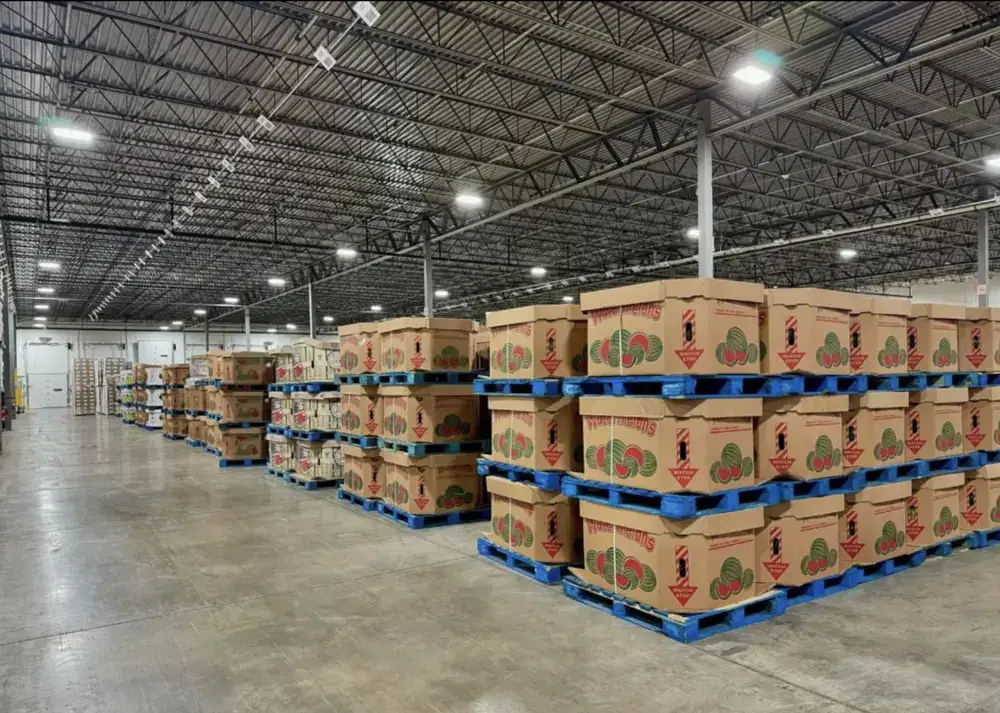
Modern facilities feature high ceilings for vertical storage, energy-efficient lighting, and robust dock systems for high throughput. Flooring is smooth and sealed for sanitation, particularly in food-grade warehousing, where contamination prevention is critical.
Facility Feature | Why It Matters |
Multi-temperature zones | Supports ambient, chilled, and frozen goods in one facility |
Energy-efficient systems | Reduces operating costs and environmental footprint |
High-clearance ceilings | Maximizes vertical storage and pallet density |
Modern dock equipment | Ensures safe, fast loading and unloading |
Secure, climate-controlled areas | Protects sensitive or perishable products |
Many older warehouses lack temperature zoning or energy-efficient systems. These limitations can drive up costs or lead to compliance issues - especially for food and pharmaceutical clients.
Technology: The Digital Backbone of Modern Warehousing
Technology is what truly distinguishes a modern warehouse from a traditional one. It enables precision, visibility, and control — from receiving to outbound shipping.
At Lindner Logistics, technology is built into every process. Our Warehouse Management System (WMS) provides real-time inventory tracking, barcode scanning, and automated reporting. This ensures complete traceability and reduces human error.
How WMS Technology Powers Efficiency
A WMS integrates all aspects of warehouse operations - inventory, orders, picking, and shipping - into one digital system. For clients, this means total visibility: they can see what’s in stock, what’s shipping, and what’s inbound at any given moment.
Technology Function | Operational Benefit |
Real-time inventory updates | Eliminates stock discrepancies |
Barcode & RFID scanning | Improves picking accuracy |
Automated order processing | Reduces manual labor and errors |
Integration with ERP systems | Enables seamless data exchange |
Temperature and location tracking | Ensures compliance and product integrity |
When evaluating a logistics partner, ask about their WMS capabilities. Real-time visibility isn’t a luxury anymore - it’s an expectation in every modern supply chain.
Automation and Robotics: Driving Productivity at Scale
While full automation may not fit every operation, many modern warehouses leverage robotics and semi-automated systems to improve efficiency.
Examples include conveyor sorting systems, automated guided vehicles (AGVs), and robotic palletizers that handle repetitive tasks with speed and precision. Even partial automation can reduce labor costs, improve consistency, and speed up fulfillment.
At Lindner Logistics, automation is paired with experienced personnel - ensuring human oversight remains at the heart of operations while technology enhances efficiency and reliability.
Temperature Control: Essential for Food and Cold Chain Products
Temperature management is no longer a niche capability - it’s a defining feature of modern logistics. Whether storing packaged foods, beverages, or pharmaceuticals, maintaining product integrity through precise temperature zones is critical.
Lindner’s multi-temperature warehousing model includes:
Ambient zones for shelf-stable goods
Refrigerated areas for perishables
Freezer environments for long-term storage
Each zone is monitored 24/7 with automated alerts to prevent deviations. Redundant power and backup systems ensure uninterrupted performance, safeguarding your inventory even during power outages.
Value-Added Services: Going Beyond Storage
Modern warehouses are more than storage centers - they’re complete logistics ecosystems offering services that simplify the entire supply chain.
Lindner Logistics offers value-added services such as:
Kitting and assembly
Repackaging and relabeling
Pallet configuration and stretch wrapping
Pick and pack fulfillment
These services enable businesses to customize orders closer to the point of shipping, reducing lead times and handling costs. For example, a food brand can store bulk product and have it labeled for retail or promotional use directly at the warehouse - streamlining operations and reducing transit delays.
Compliance and Safety: The Non-Negotiable Standard
A modern warehouse must not only be efficient but compliant and safe. This is especially vital for industries like food, beverage, and pharmaceuticals.
Lindner’s food-grade warehousing facilities meet or exceed standards set by:
FDA (Food and Drug Administration)
FSMA (Food Safety Modernization Act)
HACCP (Hazard Analysis and Critical Control Points)
Regular third-party audits, sanitation protocols, and pest control programs ensure ongoing compliance. Our teams undergo continual training to maintain best practices in safety and handling.
Always ask for audit certifications and documentation when selecting a warehouse. Transparency is the hallmark of a truly modern logistics provider.
Sustainability and Green Operations
Environmental responsibility is another hallmark of a modern warehouse. As sustainability becomes central to corporate supply chain goals, more companies are choosing logistics partners that minimize their carbon footprint.
Lindner Logistics integrates sustainable practices such as energy-efficient lighting, optimized route planning, and waste reduction initiatives.
These green measures not only benefit the planet but also reduce energy and maintenance costs - creating long-term operational savings that clients can share.
Strategic Location: The Logistics Advantage
Location remains a core factor in modern warehousing. A facility’s position relative to major transportation routes affects delivery times, freight costs, and customer satisfaction.
Lindner’s Wisconsin-based warehouses offer a strategic Midwest advantage - enabling cost-effective national distribution within two-day ground reach of most major U.S. markets.
A national retailer shipping to both coasts can fulfill from a centrally located Wisconsin warehouse, cutting transit costs by up to 25% compared to coastal-only operations.
How to Choose the Right Modern Warehouse Partner
When evaluating logistics providers, focus on these five criteria:
Facility design (temperature zones, scalability, cleanliness)
Technology (WMS, automation, real-time visibility)
Services (value-added offerings and fulfillment capabilities)
Compliance (food safety, audits, documentation)
Location (distribution efficiency and reach)
Lindner Logistics combines all these elements into a cohesive, technology-driven warehousing ecosystem - designed to help clients scale efficiently and confidently.
Final Thoughts: Modern Warehousing Is About Partnership
A truly modern warehouse doesn’t just store goods - it accelerates growth. With integrated technology, scalable infrastructure, and full-service logistics solutions, providers like Lindner Logistics act as strategic partners in supply chain success.
Whether you need multi-temperature warehousing, food-grade storage, or 3PL fulfillment services, Lindner provides the facilities, systems, and expertise to optimize your operations.
Ready to modernize your supply chain? Discover how Lindner Logistics combines state-of-the-art technology and flexible infrastructure to deliver smarter warehousing solutions - today and for the future.