10 Questions to Ask Before Selecting a 3PL Logistics Company
October 9th, 2025
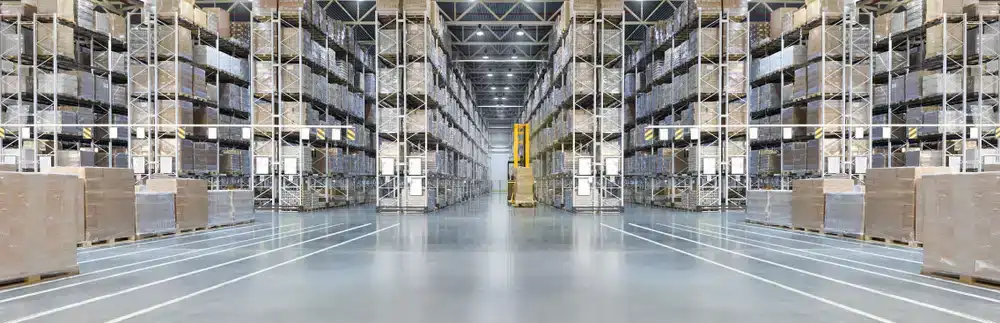
Choosing the right third-party logistics (3PL) partner can make or break your supply chain success. Whether your business needs temperature-controlled storage, food-grade warehousing, or ecommerce fulfillment, your logistics provider should align with your operational goals.
Below are the 10 most important questions to ask before partnering with a 3PL company - written to help you make a smart, strategic decision.
What Industries Does the 3PL Specialize In?
Before signing any contract, ensure your 3PL has proven expertise in your industry. For instance, if you manage food or beverage products, your partner should operate an FDA-compliant, food-grade warehouse with strict quality controls.
At Lindner Logistics, we specialize in food and beverage logistics, cold storage, and multi-temperature environments that meet regulatory standards.
Pro tip
Ask for compliance certifications and temperature logs to verify experience and quality assurance.
Can they scale with time?
As your business grows, your logistics needs will evolve. Choose a 3PL that offers flexible warehouse solutions to handle seasonal fluctuations or rapid expansion.
Our Warehousing Solutions are designed for scalability - from general storage to freezer and refrigerator storage, allowing clients to expand capacity without changing providers.
Do they use a WMS or WORCS?
Modern logistics runs on technology. Ask whether your 3PL uses a WORCS for real-time inventory tracking, order accuracy, and analytics.
At Lindner, our WORCS Technology provides transparent data on product movement, expiration tracking, and automated reporting - ensuring you stay in control of your supply chain.
Do They Offer Value-Added Services?
A great 3PL does more than store inventory - they optimize it. Services like kitting, labeling, assembly, and repackaging can save time and reduce fulfillment costs.
Explore Lindner’s Value-Added Services to see how we help clients streamline production and fulfillment without additional overhead.
Where Are Their Facilities Located?
Proximity to your customers and suppliers affects delivery speed and cost. A centrally located warehouse, such as our Wisconsin facilities, ensures nationwide distribution efficiency with lower transportation expenses.
Facility | Type | Strategic Advantage |
Cold, frozen, and dry storage | Central U.S. location for fast Midwest distribution | |
Multi-temperature warehousing | Access to major highways and intermodal hubs |
How Do They Handle Food Safety and Compliance?
If you’re in the food and beverage industry, regulatory compliance is non-negotiable. Ask about certifications such as FDA, FSMA, or SQF.
Lindner Logistics operates certified food-grade and temperature-controlled warehouses that adhere to strict food safety protocols. Visit our Food Storage page for details.
Do they have good performance?
Consistency defines reliability. Request key performance metrics like on-time shipping rates and order accuracy percentages. At Lindner, we maintain industry-leading accuracy rates thanks to automated processes and experienced warehouse teams.
How Do They Communicate and Provide Support?
Transparent communication is critical for long-term success. Look for a provider that assigns a dedicated account manager and offers 24/7 visibility into operations.
Our customer-first approach ensures every client gets a customized logistics plan backed by proactive support.
If a 3PL can’t provide real-time updates or account-level reporting, it may cause costly blind spots later.
How Do They Approach Sustainability?
More brands are prioritizing sustainable logistics practices to meet ESG goals. Ask about energy-efficient equipment, recycling programs, and carbon reduction efforts.
Lindner continues to invest in green technologies and sustainable warehouse design, supporting eco-conscious partners across industries.
Can They Support Future Growth and Innovation?
Finally, consider whether your 3PL partner can evolve with your business. As automation, AI, and robotics reshape the logistics landscape, you’ll need a partner that invests in the future.
Final Thoughts
Selecting a 3PL is a long-term strategic decision that impacts your supply chain efficiency, cost, and customer satisfaction. By asking the right questions upfront, you can identify a partner who not only meets your needs today but positions your business for success tomorrow.
Ready to optimize your supply chain?
Explore Warehousing Solutions, Food Storage, and Value-Added Services or Contact Us to learn how Lindner Logistics can help your business scale efficiently.
Related news
View all
September 21st, 2026
Pharma and Healthcare Logistics: What Temperature Control and Traceability Requirements Actually Mean for Your 3PL
Cold storage is a starting point, not a qualification. For pharmaceutical and healthcare businesses, the real question is whether a 3PL partner meets the regulatory requirements that apply to pharmaceutical distribution - and whether their systems produce the documentation to prove it. This article covers DSCSA authorization and traceability, cGMP storage controls, international GDP guidance, pharmaceutical temperature requirements, and what a WMS needs to do to support compliant operations.

September 14th, 2026
The Hidden Costs of Getting Retail Compliance Wrong: Chargebacks, Rejections, and What Actually Prevents Them
Retail chargebacks show up as deductions. Rejected shipments show up as return freight costs and delayed revenue. Neither appears as a catastrophic single event, but the cumulative effect on margins is significant and almost entirely preventable with the right warehouse operations in place. This article breaks down what causes retail compliance failures, what they actually cost when measured honestly, and what the operational changes look like that prevent them upstream.
September 7th, 2026
Just-in-Time Warehousing vs. Safety Stock: Which Inventory Strategy Fits Your Business?
Just-in-time warehousing and safety stock represent opposite ends of the inventory strategy spectrum, and both have genuine business cases depending on demand predictability, supplier reliability, and risk tolerance. Getting the balance wrong in either direction costs money, either in excess holding costs or in stockouts and missed orders. This article explains how each strategy works, what the trade-offs are, and how to think about the right approach for your specific operation.