Crossing Borders Smoothly: Canada to Milwaukee
September 18th, 2025
For many Canadian companies, the U.S. Midwest isn’t just another market - it’s the market. Milwaukee, Wisconsin, sits at the heart of America’s manufacturing and distribution network, offering access to Chicago, Minneapolis, and beyond.
But cross-border logistics between Canada and the United States can be complicated. Between customs paperwork, temperature management, and last-mile delivery, one delay at the border can derail an entire shipment.
That’s why more Canadian exporters are turning to Lindner Logistics - a trusted Midwest-based 3PL that helps simplify and accelerate transportation between Canada and Milwaukee.
Here’s what you need to know about making your U.S. deliveries seamless, efficient, and compliant.
Why Milwaukee Is a Smart Gateway for Canadian Shippers
Milwaukee offers direct access to major interstate routes (I-94, I-43, I-41), connecting seamlessly to Chicago, Minneapolis, and Detroit. For Canadian exporters - particularly those shipping from Toronto, Windsor, or Montreal - it’s one of the most efficient entry points to serve the U.S. Midwest.
Key advantages:
Central location for regional U.S. distribution
Lower congestion and warehousing costs than Chicago
Proximity to key industrial and retail markets
Excellent access to ports, rail, and trucking infrastructure
By positioning goods in Milwaukee, Canadian businesses can reduce transit times, cut freight costs, and serve multiple states from a single distribution point.
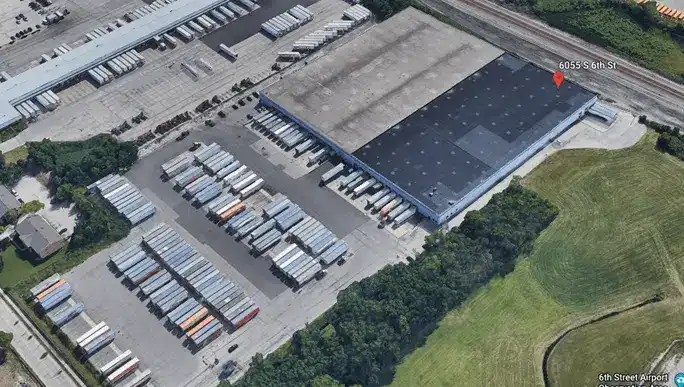
Lindner Logistics operates strategically located warehouses in the Milwaukee area, giving Canadian companies instant access to U.S. distribution networks - without the burden of setting up their own facility.
Understanding Cross-Border Transportation Challenges
Transporting goods across the U.S.–Canada border involves more than distance. Shippers must navigate:
Customs documentation (commercial invoices, packing lists, certificates of origin)
U.S. Food and Drug Administration (FDA) or CFIA compliance for food shipments
Carrier certifications and temperature requirements for perishables
Storage and re-distribution once goods arrive stateside
Missing a single form or temperature log can lead to inspections, penalties, or rejected loads. That’s why partnering with a U.S. logistics provider experienced in cross-border operations is critical.
Lindner Logistics routinely handles inbound shipments from Canada, managing customs coordination, temperature-controlled transfer, and regional delivery - ensuring smooth entry and timely delivery throughout the Midwest.
Temperature-Controlled Transport for Food and Perishables
Many Canadian exports to the U.S. include food, beverages, and other perishables. Maintaining product quality across long distances and customs stops requires robust cold chain management.
Lindner Logistics specialises in:
Multi-temperature warehousing (frozen, chilled, and dry)
Refrigerated truck transportation
Cross-docking and short-term storage
Real-time temperature monitoring for FSMA compliance
For Canadian food producers - from dairy and meat processors to frozen meal manufacturers - Lindner’s facilities provide a reliable, FDA-registered hub for safe product handling once goods enter the U.S.
Simplify Customs and Distribution
The biggest hurdle in cross-border shipping is usually the handoff - when goods cross from a Canadian carrier into the U.S. distribution network. Without coordination, that’s where delays happen.
Lindner Logistics helps streamline that process by:
Coordinating carrier transfers at the border or U.S. port of entry
Managing import storage and customs clearance support
Offering final-mile delivery across Wisconsin, Illinois, and surrounding states
Providing order fulfilment and value-added services like labelling and repackaging
That means you can ship directly from Canada, have Lindner receive and store your goods, and distribute to your U.S. customers - all through one integrated system.
Set Up a U.S. Distribution Base Without the Risk
For many Canadian exporters, the next step after occasional cross-border shipments is establishing a permanent U.S. presence. But opening your own warehouse can be expensive and complex.
With Lindner Logistics, you can operate as if you already have a U.S. distribution center - without the capital investment.
Lindner provides:
Flexible warehousing space for seasonal or ongoing needs
Pick-and-pack fulfillment for e-commerce or wholesale
Transportation management and load optimization
Inventory visibility tools for real-time control
This setup gives your customers shorter lead times and lower freight costs, while you retain control from across the border.
Reduce Delays and Improve Delivery Reliability
Time is money - and border delays, missed appointments, or storage bottlenecks can hurt customer relationships.
Lindner Logistics focuses on operational reliability through:
24/7 monitored facilities
Efficient dock scheduling and quick turnarounds
Direct communication between warehouse and carrier
Real-time shipment visibility
For Canadian exporters, that means faster entry, smoother transitions, and consistent delivery performance - no matter the season or product type.
Why Canadian Businesses Choose Lindner Logistics
Lindner Logistics is more than a storage company - it’s a full-service logistics partner offering:
Multi-temperature warehousing
Refrigerated and dry transportation
Cross-docking and value-added services
Regional distribution throughout the Midwest
Compliance expertise for food, retail, and manufacturing goods
By choosing Lindner, Canadian businesses gain a trusted, U.S.-based logistics partner that understands both sides of the border - ensuring every shipment arrives fresh, compliant, and on time.
The Bottom Line
Expanding into the U.S. market doesn’t have to mean more complexity. With the right partner, transporting goods from Canada to Milwaukee - and throughout the Midwest - can be seamless, compliant, and cost-effective.
Whether you’re moving frozen food, retail inventory, or industrial components, Lindner Logistics offers the infrastructure and expertise to make your cross-border operations smooth from start to finish.
👉 Get in touch with Lindner Logistics today to learn how we help Canadian businesses deliver faster, safer, and smarter to the U.S. Midwest.
Related news
View all
September 21st, 2026
Pharma and Healthcare Logistics: What Temperature Control and Traceability Requirements Actually Mean for Your 3PL
Cold storage is a starting point, not a qualification. For pharmaceutical and healthcare businesses, the real question is whether a 3PL partner meets the regulatory requirements that apply to pharmaceutical distribution - and whether their systems produce the documentation to prove it. This article covers DSCSA authorization and traceability, cGMP storage controls, international GDP guidance, pharmaceutical temperature requirements, and what a WMS needs to do to support compliant operations.

September 14th, 2026
The Hidden Costs of Getting Retail Compliance Wrong: Chargebacks, Rejections, and What Actually Prevents Them
Retail chargebacks show up as deductions. Rejected shipments show up as return freight costs and delayed revenue. Neither appears as a catastrophic single event, but the cumulative effect on margins is significant and almost entirely preventable with the right warehouse operations in place. This article breaks down what causes retail compliance failures, what they actually cost when measured honestly, and what the operational changes look like that prevent them upstream.
September 7th, 2026
Just-in-Time Warehousing vs. Safety Stock: Which Inventory Strategy Fits Your Business?
Just-in-time warehousing and safety stock represent opposite ends of the inventory strategy spectrum, and both have genuine business cases depending on demand predictability, supplier reliability, and risk tolerance. Getting the balance wrong in either direction costs money, either in excess holding costs or in stockouts and missed orders. This article explains how each strategy works, what the trade-offs are, and how to think about the right approach for your specific operation.