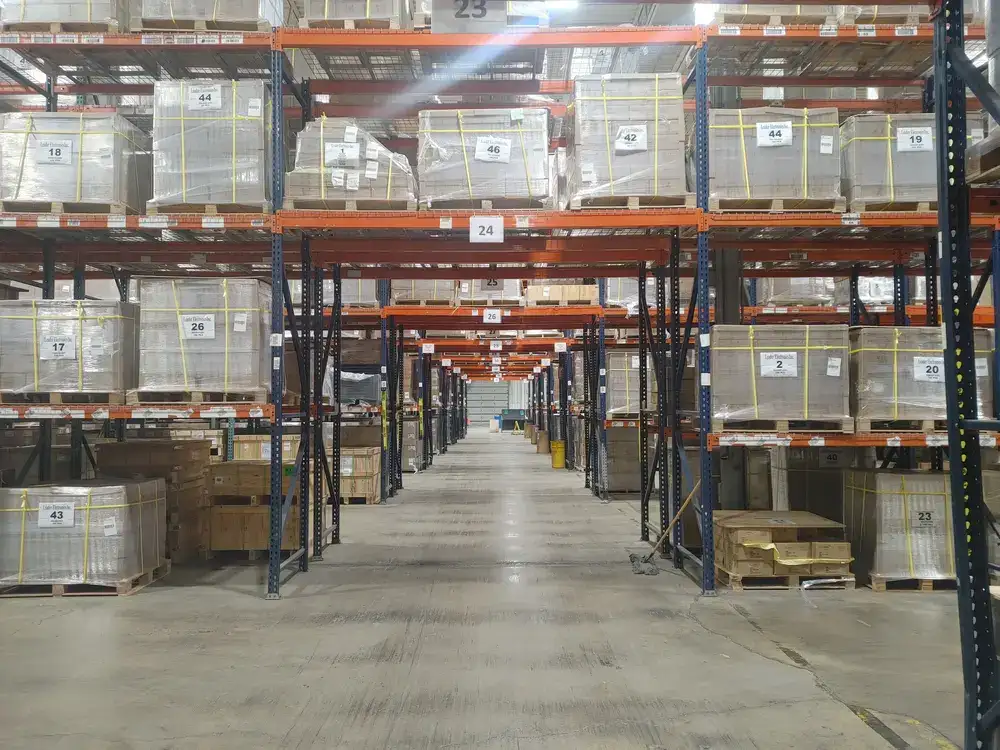
How a 3PL with a Foreign Trade Zone Can Save You Millions in Supply Chain Costs
June 17th, 2025
In today’s economy, where logistics expenses are rising and global supply chains are under constant pressure, smart businesses are looking for more than just a place to store goods—they’re looking for strategic savings. At Lindner Logistics, we offer a unique competitive advantage: a 3PL facility that operates inside a certified Foreign Trade Zone (FTZ) in Milwaukee, Wisconsin.
Combining FTZ benefits with advanced warehouse management systems (WMS), temperature-controlled storage, and scalable order fulfillment, our clients enjoy meaningful reductions in both operational complexity and import/export costs.
What Is a 3PL with an FTZ?
A 3PL, or third-party logistics provider, handles warehousing, distribution, and sometimes transportation on your behalf. But when that 3PL operates inside a Foreign Trade Zone, it unlocks powerful advantages for businesses that import, manufacture, or distribute goods across borders.
An FTZ is a specially designated area within the United States, located near ports or inland trade hubs, where businesses can store, assemble, or process goods without immediately paying import duties. Duties are only collected if and when goods leave the zone and enter U.S. commerce.
Think of it as a tariff-free holding zone - and Lindner Logistics is the only public 3PL warehouse in Wisconsin to offer it.
How Can a Free Trade Zone Save You Money?
Here are some of the real, measurable ways an FTZ saves money:
Duty Deferral: Pay customs duties only when products leave the zone. This significantly improves cash flow, especially for slow-moving goods.
Inverted Tariff Relief: If finished goods are taxed at a lower rate than their components, you pay the lower rate - saving on manufacturing costs.
Re-export Exemptions: If products stored or assembled in the FTZ are exported again, no duties are paid at all.
Inventory Tax Reductions: Goods in an FTZ are exempt from local inventory taxes, which can be a hidden six-figure cost annually.
Fewer Customs Entries: Consolidate multiple imports into a single customs entry, reducing paperwork and brokerage fees.
Real-World FTZ Benefits for Importers
Here’s a breakdown of how FTZ benefits can translate into real financial savings:
Example Scenario | Traditional Model | With FTZ at Lindner Logistics |
$5M in annual imports (raw materials) | $500K in upfront duties | $0 until goods enter U.S. market |
50 monthly customs entries | $25K/year in broker fees | $5K/year (consolidated entries) |
Unsold seasonal inventory in Dec. | $15K in inventory tax | $0 (not taxable in FTZ) |
Exported surplus goods | Duties still paid, no refund | No duties paid at all |
These savings are especially attractive to industries such as electronics, automotive, pharma, and consumer goods.
Why Lindner’s Milwaukee FTZ Makes a Difference
Not all FTZs are created equal. At Lindner Logistics, our FTZ-certified warehouse offers:
Full public FTZ access: No need to establish your own zone
Temperature-controlled storage: Ideal for food, pharma, and perishables
HazMat-compliant space: Secure and regulatory-ready
BRC-certified handling: Trusted by top food and ingredient suppliers
Integrated WMS software: Real-time visibility, reporting, and compliance
Direct-to-consumer (D2C) fulfillment: Great for e-commerce or subscription models
And thanks to our strategic Milwaukee location, clients benefit from direct access to Midwest highways, the Port of Milwaukee, and nearby intermodal rail connections
What to Look for in a Cost-Saving Logistics Partner
If you’re comparing 3PLs, ask these questions:
Do they operate inside an FTZ?
Can they handle both B2B and D2C orders efficiently?
Is their WMS technology giving you real-time visibility?
Do they offer specialized storage (cold, HazMat, etc.)?
Will they tailor a plan to your supply chain, not just offer shelf space?
At Lindner Logistics, we answer “yes” to all of the above - and more.
Start Saving on Storage, Duties, and Fulfillment Today
Every dollar saved on duties, taxes, and delays is a dollar that can be reinvested in your business. Whether you're a growing importer or an established global brand, Lindner Logistics can help you cut supply chain costs without sacrificing service or compliance.
👉 Contact us today to learn how our Milwaukee-based FTZ warehouse and advanced logistics technology can transform your supply chain from a cost center into a competitive advantage.
Related news
View all
September 21st, 2026
Pharma and Healthcare Logistics: What Temperature Control and Traceability Requirements Actually Mean for Your 3PL
Cold storage is a starting point, not a qualification. For pharmaceutical and healthcare businesses, the real question is whether a 3PL partner meets the regulatory requirements that apply to pharmaceutical distribution - and whether their systems produce the documentation to prove it. This article covers DSCSA authorization and traceability, cGMP storage controls, international GDP guidance, pharmaceutical temperature requirements, and what a WMS needs to do to support compliant operations.

September 14th, 2026
The Hidden Costs of Getting Retail Compliance Wrong: Chargebacks, Rejections, and What Actually Prevents Them
Retail chargebacks show up as deductions. Rejected shipments show up as return freight costs and delayed revenue. Neither appears as a catastrophic single event, but the cumulative effect on margins is significant and almost entirely preventable with the right warehouse operations in place. This article breaks down what causes retail compliance failures, what they actually cost when measured honestly, and what the operational changes look like that prevent them upstream.
September 7th, 2026
Just-in-Time Warehousing vs. Safety Stock: Which Inventory Strategy Fits Your Business?
Just-in-time warehousing and safety stock represent opposite ends of the inventory strategy spectrum, and both have genuine business cases depending on demand predictability, supplier reliability, and risk tolerance. Getting the balance wrong in either direction costs money, either in excess holding costs or in stockouts and missed orders. This article explains how each strategy works, what the trade-offs are, and how to think about the right approach for your specific operation.