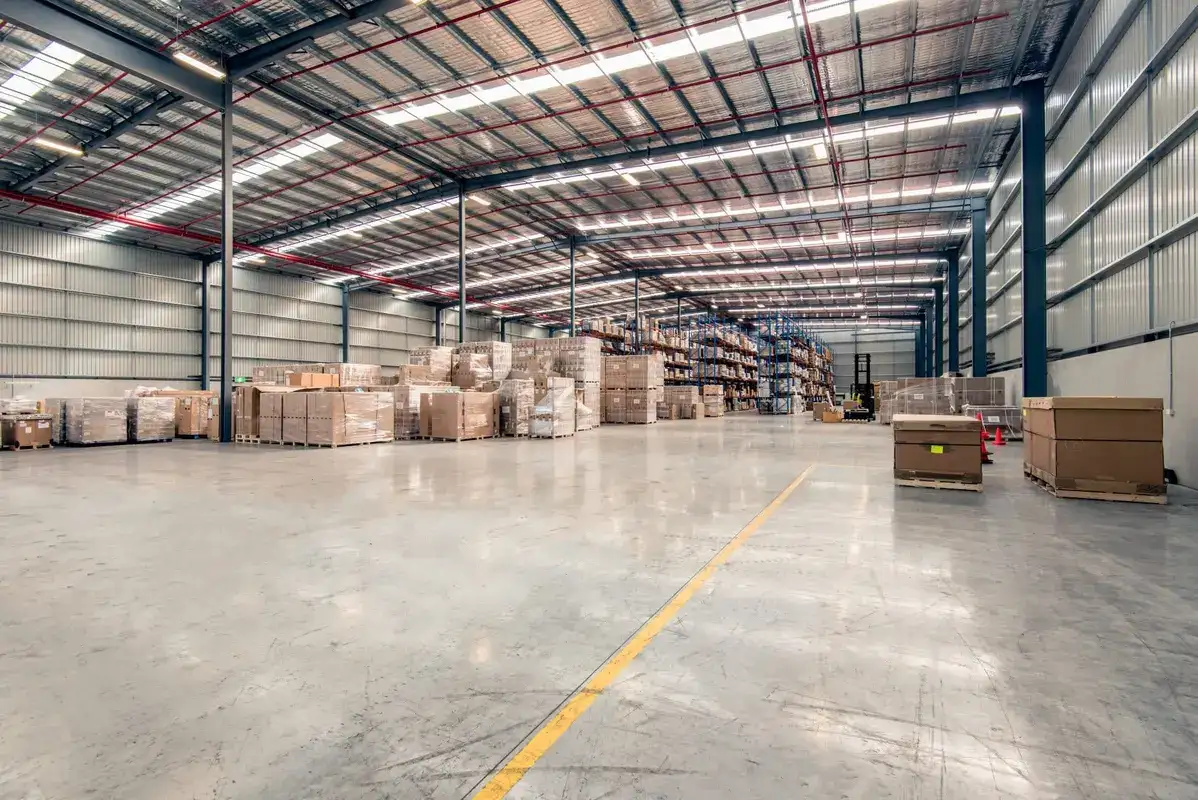
How to legally store HazMat?
April 1st, 2025
If you're managing hazardous materials - whether flammable liquids, corrosives, or industrial chemicals -then you already know there's no room for shortcuts. Storing Hazmat is not just about having extra warehouse space. It’s about compliance, safety, liability, and choosing the right partner who understands the high stakes involved.
For businesses based in the Wisconsin, especially in and around Milwaukee, Lindner Logistics offers a full-service solution that meets all federal, state, and local requirements for Hazmat storage. But before we get into why Lindner is trusted by companies across the region, let’s take a step back and look at what it actually means to legally store hazardous materials.
What Qualifies as Hazmat?
Hazmat, short for hazardous materials, includes a wide range of substances that can pose risks to human health, property, and the environment. This includes everything from lithium batteries and industrial cleaning agents to flammable solvents and compressed gases.
To legally store these materials, it’s essential to understand their classification under federal regulations. Hazmat is divided into nine hazard classes under the U.S. Department of Transportation. Each class comes with its own rules for storage, handling, and transportation.
Common Hazmat Classes and Examples
Hazard Class | Description | Examples |
|---|---|---|
Class 3 | Flammable Liquids | Gasoline, paint thinner |
Class 5 | Oxidizing Substances | Hydrogen peroxide |
Class 8 | Corrosive Materials | Sulfuric acid, ammonia |
Class 9 | Miscellaneous Hazards | Lithium batteries, dry ice |
Properly identifying what you're storing is the first step toward compliance - and it’s where many companies already start to run into problems.
Legal Requirements You Can't Ignore
Storing hazardous materials is governed by a combination of federal regulations (from OSHA, the EPA, and the DOT), state laws, and local fire codes. While the rules can vary depending on your location and the type of material you're storing, there are a few legal requirements that apply nearly across the board.
Labeling and signage are non-negotiable. Every container must be clearly marked according to the Globally Harmonized System (GHS), and proper placards must be visible in your facility. Storage conditions - including temperature, segregation, and ventilation - must meet very specific standards depending on the type of material.
And then there’s employee training. Anyone who handles Hazmat must complete federally mandated training every three years. This includes understanding how to respond to spills or leaks, how to use personal protective equipment, and how to follow emergency procedures.
Improper segregation - like storing flammable materials near oxidisers is one of the most common violations in warehouse audit. It’s also one of the most dangerous.
It doesn’t stop there. Most local jurisdictions require permits for storing specific quantities of Hazmat, and inspections are often required before you can even begin operations. Documentation and record-keeping must be thorough and updated regularly, especially if you're dealing with waste materials regulated under the EPA's RCRA (Resource Conservation and Recovery Act).
Lindner’s Milwaukee facility is located near key freight corridors, offering faster transit times and smoother logistics for clients shipping hazardous goods across the Midwest.
Not All 3PLs Can Handle Hazmat - Here’s Why That Matters
Most third-party logistics providers don’t deal with Hazmat at all. Why? Because the risks, infrastructure requirements, and regulatory obligations are intense. It takes a significant investment to set up a compliant facility, train staff, and maintain certifications. Lindner has made that investment - so you don’t have to.
If you're storing Hazmat at your own facility or working with a provider who doesn’t specialize in hazardous materials, you’re putting your business at risk. One small mistake can result in huge fines, loss of permits, or worse - an accident that puts people and property in danger.
Related news
View all
September 21st, 2026
Pharma and Healthcare Logistics: What Temperature Control and Traceability Requirements Actually Mean for Your 3PL
Cold storage is a starting point, not a qualification. For pharmaceutical and healthcare businesses, the real question is whether a 3PL partner meets the regulatory requirements that apply to pharmaceutical distribution - and whether their systems produce the documentation to prove it. This article covers DSCSA authorization and traceability, cGMP storage controls, international GDP guidance, pharmaceutical temperature requirements, and what a WMS needs to do to support compliant operations.

September 14th, 2026
The Hidden Costs of Getting Retail Compliance Wrong: Chargebacks, Rejections, and What Actually Prevents Them
Retail chargebacks show up as deductions. Rejected shipments show up as return freight costs and delayed revenue. Neither appears as a catastrophic single event, but the cumulative effect on margins is significant and almost entirely preventable with the right warehouse operations in place. This article breaks down what causes retail compliance failures, what they actually cost when measured honestly, and what the operational changes look like that prevent them upstream.
September 7th, 2026
Just-in-Time Warehousing vs. Safety Stock: Which Inventory Strategy Fits Your Business?
Just-in-time warehousing and safety stock represent opposite ends of the inventory strategy spectrum, and both have genuine business cases depending on demand predictability, supplier reliability, and risk tolerance. Getting the balance wrong in either direction costs money, either in excess holding costs or in stockouts and missed orders. This article explains how each strategy works, what the trade-offs are, and how to think about the right approach for your specific operation.