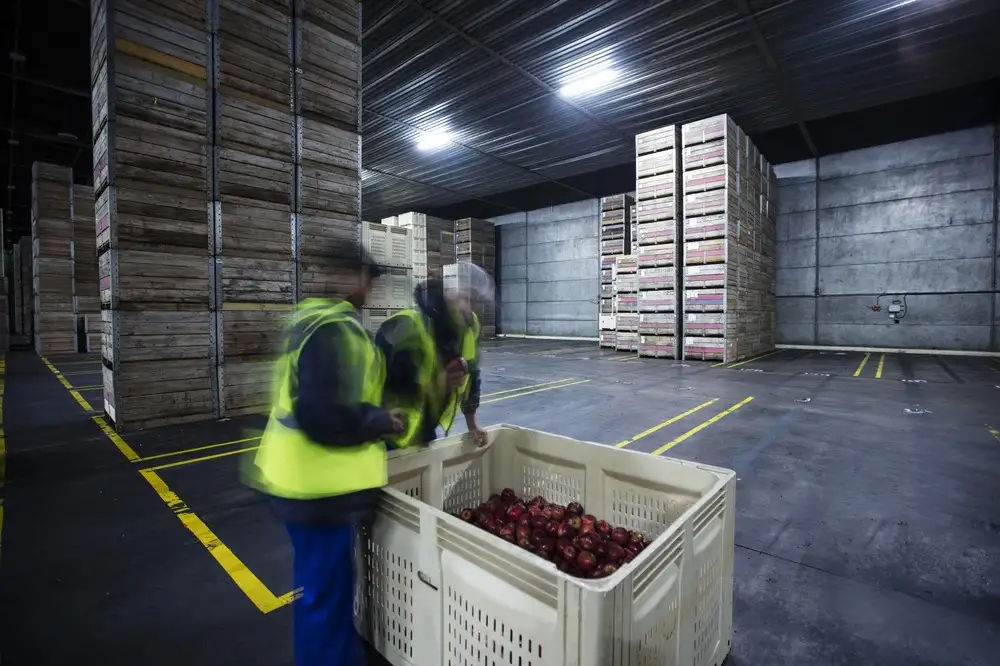
What Is a Free Trade Zone? Benefits, FTZ Warehousing & Logistics Explained
June 5th, 2025
At Lindner Logistics, we’re proud to operate the only 3PL Foreign Trade Zone (FTZ) in Wisconsin. But what exactly is a free trade zone? It’s a specially designated area - typically near ports, airports, or national borders - where goods can be imported, stored, processed, or re-exported without immediate customs duties. Companies in these zones can defer, reduce, or even eliminate tariffs, offering significant flexibility and cost savings
Key Benefits of a Free Trade Zone
Operating within a free trade zone delivers multiple strategic advantages, especially for companies engaged in international trade:
Duty deferral: Customs duties are postponed until goods leave the zone.
Cost efficiency: No tariffs on re‑exports, destroyed, or scrapped goods
Operational flexibility: Goods can be assembled, repackaged, or consolidated before entering domestic markets
Supply chain optimisation: Simplified logistics with improved visibility and compliance
These benefits align seamlessly with our broader suite of logistics and warehouse software services - including warehouse automation, inventory control systems, and supply chain analytics - ensuring comprehensive efficiency.
Keep in mind that establishing or utilizing a free trade zone involves initial setup costs, regulatory requirements, and ongoing compliance checks. But for many businesses, these investments are more than offset by the potential savings
Lindner Logistics: Leveraging Our FTZ Advantage
As Wisconsin’s only FTZ-certified warehouse provider, Lindner Logistics offers businesses unique advantages through our Milwaukee 20th Street facility:
Feature | Benefit |
FTZ certification | Defer duties until goods enter U.S. commerce |
Multi-temperature storage | Ideal for pharmaceuticals, food, and D2C retail |
BRC‑compliant & HazMat-ready | Meets stringent safety and regulatory standards |
Strategic location | Easy access to highways and airport for efficient distribution |
Plus, being the only FTZ in Milwaukee gives you a competitive edge in cost savings and supply chain agility .
How Free Trade Zones Enhance Your Supply Chain
By combining FTZ benefits with our tech-enabled services, Lindner Logistics delivers enhanced operational efficiency:
Inbound flexibility – Store and assemble imports tariff-free until demand arises.
Inventory control systems – Use real-time visibility to manage stock levels within the zone.
Warehouse automation & WMS integration – Streamline picking, packing, and transfers in our FTZ warehouse.
Order fulfillment systems – When ready, dispatch goods with duty costs optimally calculated - either on materials or finished products.
This cohesive approach ensures better cash flow, faster fulfillment, and smarter supply chain decisions.
Is a Free Trade Zone Right for Your Business?
If your company manages international freight, sensitive timelines, or fluctuating tariffs, a free trade zone could be a strategic asset. Here’s a quick assessment:
Do you import components or raw materials?
Do you assemble or repackage goods before U.S. distribution?
Are tariff deferral and supply chain visibility top priorities?
If yes, integrating FTZ services through Lindner Logistics - alongside our warehouse software development and logistics solutions - can unlock substantial operational and financial benefits.
Final Thoughts
Free trade zones are a powerful mechanism to streamline global operations, minimize costs, and improve control. At Lindner Logistics, we harness FTZ advantages combined with advanced warehousing technologies—such as warehouse automation, logistics software, and supply chain analytics—to position your business for growth and resilience.
Looking to explore FTZ capabilities?
Contact our team today to discuss how our FTZ warehousing and software solutions can transform your supply chain.
Related news
View all
September 21st, 2026
Pharma and Healthcare Logistics: What Temperature Control and Traceability Requirements Actually Mean for Your 3PL
Cold storage is a starting point, not a qualification. For pharmaceutical and healthcare businesses, the real question is whether a 3PL partner meets the regulatory requirements that apply to pharmaceutical distribution - and whether their systems produce the documentation to prove it. This article covers DSCSA authorization and traceability, cGMP storage controls, international GDP guidance, pharmaceutical temperature requirements, and what a WMS needs to do to support compliant operations.

September 14th, 2026
The Hidden Costs of Getting Retail Compliance Wrong: Chargebacks, Rejections, and What Actually Prevents Them
Retail chargebacks show up as deductions. Rejected shipments show up as return freight costs and delayed revenue. Neither appears as a catastrophic single event, but the cumulative effect on margins is significant and almost entirely preventable with the right warehouse operations in place. This article breaks down what causes retail compliance failures, what they actually cost when measured honestly, and what the operational changes look like that prevent them upstream.
September 7th, 2026
Just-in-Time Warehousing vs. Safety Stock: Which Inventory Strategy Fits Your Business?
Just-in-time warehousing and safety stock represent opposite ends of the inventory strategy spectrum, and both have genuine business cases depending on demand predictability, supplier reliability, and risk tolerance. Getting the balance wrong in either direction costs money, either in excess holding costs or in stockouts and missed orders. This article explains how each strategy works, what the trade-offs are, and how to think about the right approach for your specific operation.