Storing and Managing Temperature Sensitive Products
February 19th, 2026
Picture this, you manage a chocolate brand's supply chain and are looking for an avenue to store and transport your products. Unfortunately for you, all your chocolate has melted on the way to a retailer, ruining your stock and risking your brand's reputation. Temperature sensitive goods like chocolate require storage that considers fluctuations in climate, and adjusts accordingly. At Lindner Logistics, we intend to do just that.
What makes a Temperature Sensitive Product?
Temperature sensitive products could simply be understood as products that can be heavily impacted by temperature fluctuation, and would ideally benefit from close monitoring and controlled logistics.
Utilising the example of chocolate; this product typically needs to be stored and transported in temperatures ranging from around 59°F to 68°F, which would fall in line with ambient storage's temperature range, however, this doesn't account for seasonal temperature changes. If the environment gets too warm, the stock would melt, if it gets too cold, fat bloom forms on the chocolates' surface, and finally if there's frequent temperature swings, condensation could risk damaging the texture of the chocolate. Even brief deviations can compromise an entire pallet. Similar challenges apply to products such as:
Other confectionaries
Pharmaceuticals
Dairy products
Fresh produce
Cosmetics
Beverages (Alcoholic and Non-alcoholic)
Damaged stock makes your product unfit and likely unsafe to distribute and/or consume, not only risking your profits but also your brand reputation. This is why it is important that you seek flexible, temperature controlled storage to suit the unique needs of your product.
The Core Components in Temperature Sensitive Logistics
There are two core components to handling temperature sensitive products. Here, we outline them as being:
1) Temperature Controlled Space
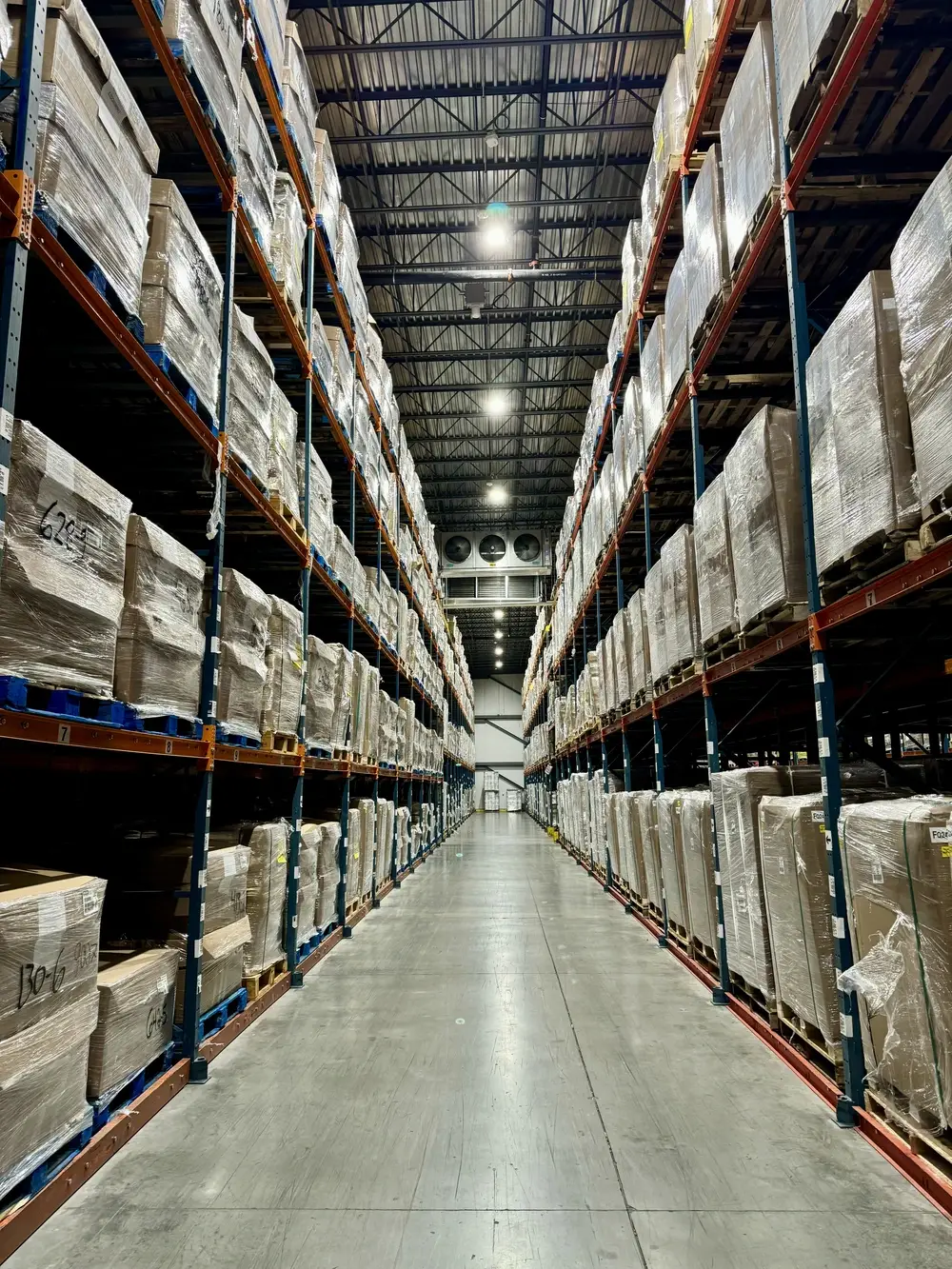
Temperature controlled space is a warehousing essential. Rather than relying on general ambient storage, temperature-controlled spaces are designed to maintain stable conditions all year round. Within these spaces, your product can be stores in dedicated temperature controlled zones. From individual pallet positions to fully designated areas designed for goods with stricter tolerances; temperature controlled spaces are ideal for your temperature sensitive products.
However, infrastructure alone is not enough to maintain the condition of these products. At Lindner Logistics, effective temperature management is supported by close and continuous 24/7 monitoring systems that track warehouse conditions in real time. In addition, backup power systems are in place to ensure refrigeration and climate controls continue operating even during unexpected power outages, safeguarding product integrity at every stage of storage.
Some goods may technically be safe at ambient temperature but still benefit from chilled storage during summer periods to protect quality and reduce returns, even if it slightly increases the storage cost. Others may require consistent year-round climate control due to regulatory, brand, or shelf-life considerations. At Linder Logistics, flexibility is central to the approach. With a variety of storage options available, from ambient to fully temperature-controlled zones; solutions can be tailored to match the specific requirements of each client. Because in temperature-sensitive logistics, one size does not fit all, and precision ensures preservation.
2) Efficient Transport
Effective and efficient transportation is just as important as controlled storage when managing temperature-sensitive goods. Even short delays or unnecessary handling can expose products to damaging temperature fluctuations. Opting to work with a logistics company that prioritises fast, same-day transport solutions, such as Lindner, helps reduce cross-border delays and minimise time in transit, protecting product integrity from warehouse to final destination. Equally important is careful loading and unloading procedures, ensuring goods are moved quickly, safely, and with minimal exposure to external conditions.
Strategic infrastructure also plays a role in maintaining stability. With direct rail access and Foreign Trade Zone (FTZ) capabilities, shipments can move more efficiently through customs processes, reducing hold times that may otherwise compromise sensitive inventory. Streamlined routing and controlled transfer points help maintain consistency across the entire supply chain.
Supporting this operational framework is the integration of WORCS (Warehouse Operations Real-Time Control System), which provides real-time shipment visibility and coordination throughout the transportation process. By combining both efficient transport solutions with advanced tracking and controlled handling, Lindner Logistics ensures that temperature-sensitive products remain protected beyond the warehouse and throughout every stage of transit.
Business Impact and Why it Matters
The way you store your goods significantly impacts your business. Choosing suitable temperature-controlled spaces for temperature-sensitive products ensures your stock remains shelf-stable. This approach guarantees regulatory compliance, reduces spoilage, prevents losses, and preserves both customer satisfaction and brand reputation.
Why Lindner is the Answer
By offering a range of storage options and efficient transport services, Lindner ensures that your products are not only stored under optimal conditions but also delivered promptly and safely. Our commitment to continuous monitoring and infrastructure resilience means that your inventory is protected against unforeseen disruptions, safeguarding both your product quality and brand reputation. With Lindner, you can trust that your temperature-sensitive goods are in expert hands, allowing you to focus on growing your business with confidence. Contact us to begin your very customised and controlled storage service.